How to organize medications for elderly parents
Why medication organization matters for caregivers
If you’re searching for how to organize medications for elderly parents, you’re already doing an important safety job. Meds can keep your parent stable. But a messy system can cause real harm.
The most common risks I see with medication management for seniors are simple mistakes:
- Missed doses (especially midday meds)
- Double-dosing (often with pain meds or sleep aids)
- Dangerous interactions (two prescribers, one patient)
- Expired meds that “seem fine” but aren’t
- Look-alike pills that get mixed up
Treat medication management as a safety priority if any of these are true:
- Your parent has memory changes or confusion
- They take 5+ meds (very common)
- They see more than one doctor
- They’ve had a fall, fainting, or dizziness
- Pills are scattered in different rooms or bags
Tip: If you’ve ever asked, “Did you take it already?” you need a clearer system.
Start with a complete medication inventory (the 20-minute reset)
The fastest way to learn how to organize medications for elderly parents is to reset everything once. This is your “start line.” It takes about 20 minutes.
Gather everything in one place (including OTCs and supplements)
Grab a bag or bin and collect all meds from the whole house:
- Prescription bottles
- Over-the-counter meds (pain relievers, allergy pills, antacids)
- Vitamins and minerals (vitamin D, calcium, iron)
- Herbal products (turmeric, St. John’s wort, melatonin)
- Inhalers and nebulizer meds
- Creams and ointments (steroid creams, antifungals)
- Eye drops and ear drops
- “As needed” meds (PRN), like nausea pills or rescue inhalers
- Old bottles “just in case”

Create a master med list you can share
Now make one master list. This becomes your source of truth. It also helps prevent medication errors in elderly patients during doctor visits.
Record these details for each item:
- Name (brand and generic if shown)
- Strength (example: 10 mg)
- Directions (example: “1 tablet twice daily”)
- What it’s for (blood pressure, thyroid, pain)
- Prescriber name
- Pharmacy name
- Refill date or “refills left”
- Start date (if new)
- Known allergies and past reactions
Also, flag problems right away:
- Duplicate meds (two bottles of the same drug)
- Old doses (10 mg and 20 mg mixed)
- Expired items
- Pills in unmarked containers
Tip: Keep the master list in your phone and printed on paper.
Coordinate with doctors and pharmacists before you set a system
A strong system matters. But you also want the simplest regimen possible. That’s a huge part of how to organize medications for elderly parents.
Ask for a medication review (especially with 5+ meds)
Ask the pharmacist for a “brown bag review.” Bring the full bag of meds. Or ask for a full medication review at the next visit.
This helps spot:
- Drug interactions
- Two meds doing the same job
- High-risk meds for seniors (sedatives, strong anticholinergics)
- Timing conflicts that make adherence hard
Note: Use one pharmacy when you can. It reduces interaction risk and makes refills easier.
Simplify the regimen when possible
Simplifying is one of the best ways to prevent medication errors in elderly patients.
Ask the doctor or pharmacist:
- Can any meds be once daily?
- Are there combination pills (two meds in one)?
- Would blister packs help?
- Are generics okay to lower cost?
- Which meds can be taken together?
- Thyroid meds often need an empty stomach
- Calcium and iron can block absorption of some meds
- Some antibiotics can’t be taken with minerals
Choose the right organizing method for your parent’s needs
There isn’t one “perfect” method. The best answer for how to organize medications for elderly parents depends on your parent’s body and brain.
Match the system to cognition, dexterity, and schedule
Choose based on real life, not wishful thinking.
Consider:
- Vision (can they read small print?)
- Arthritis (can they open lids?)
- Tremor (can they pick up small pills?)
- Memory (do they remember if they took a dose?)
- Independence goals (what can they do safely?)
Decide who fills and who administers
Be clear about roles. This prevents “I thought you did it.”
Decide:
- Who fills the weekly organizer (you, your parent, or the pharmacist)
- Who gives the dose (your parent, you, or a paid caregiver)
- Who checks adherence (daily text, quick call, or log)
- Weekly organizer at home
- A small “out-of-home” option for appointments
- Original bottles stored for backup and label checks
Comparison table: medication organization options for caregivers
Use this table to pick the best setup for medication management for seniors. Then adjust as needs change.
| Option | Best for | Pros | Common pitfalls |
|---|---|---|---|
| Weekly pill organizer (AM/PM) | Stable routines, 4–12 daily pills | Fast to check if doses were taken | Wrong fill day can affect the whole week |
| Daily pill boxes (one day at a time) | Parents who get overwhelmed | Less confusing than a full week | Easy to lose a day’s box |
| Pharmacy blister packs (multi-dose packaging) | Complex regimens, memory issues | Very clear, hard to double-dose | Changes mid-month can cause waste |
| Caregiver-administered dosing (no organizer) | High-risk meds, severe confusion | Highest control and safety | Time-heavy for caregivers |
| On-the-go carry option (single dose) | Appointments, outings, travel days | Keeps doses with you, reduces bottle hauling | Must be labeled and used correctly |
Tip: If your parent has memory issues, avoid “loose pills in a bag.” It’s a top cause of mix-ups.
Set up a simple, repeatable routine (so it actually sticks)
A system only works if it’s boring and repeatable. That’s the secret to how to organize medications for elderly parents.
Create dose “anchors” tied to daily habits
Exact times can be hard. Anchors are easier.
Examples of anchors:
- Morning meds: after brushing teeth
- Noon meds: with lunch
- Evening meds: after the evening news
- Bedtime meds: when the phone goes on the charger
Note: Some meds must be taken at specific times. Confirm with the pharmacist.
Build in a refill-and-review rhythm
Pick one weekly “med admin” time. Many caregivers choose Sunday.
Your weekly routine:
- Refill the organizer
- Count remaining pills for each med
- Check refill dates and request refills early
- Update the master list if anything changed
- What it’s for
- How often it can be taken
- Max daily dose
- When to call the doctor
Tip: Put PRN meds in a separate labeled bin. Don’t mix them into daily meds unless instructed.
Labeling and storage tips to prevent mix-ups (and keep meds effective)
A big part of how to prevent medication errors in elderly adults is storage. Heat, moisture, and clutter cause mistakes.
Use these rules:
- Store meds in a cool, dry place
- Avoid bathrooms (steam ruins many meds)
- Avoid kitchens near the stove or sink
- Keep a dedicated “med station” bin or drawer
Labeling that actually helps:
- Large-print labels (ask the pharmacy)
- Color-coding by time of day (morning = yellow, night = blue)
- A simple sign at the med station: “Check the log before dosing”
Tip: If two pills look alike, ask the pharmacy if they can change the manufacturer.
Safety essentials: missed doses, double doses, and medication interactions
This is the part caregivers worry about most. And it’s a key reason people search how to organize medications for elderly parents.
What to do if a dose is missed (and when to call for help)
Create a written missed-dose plan with the pharmacist. Different meds have different rules.
General safer steps:
- Check the organizer/log first. Don’t guess.
- If it’s only a little late, many meds can be taken then.
- If it’s close to the next dose, some meds should be skipped.
- Never “double up” unless a professional told you to.
- The med is insulin, blood thinner, seizure med, or heart rhythm med
- Your parent feels faint, confused, or short of breath
- You’re not sure what was taken
Note: If you suspect an overdose or dangerous mix, call Poison Control (US): 1-800-222-1222.
Red flags that warrant a medication check
After any med change, watch closely for:
- Dizziness or new falls
- Confusion or sleepiness
- Appetite changes
- New swelling
- Constipation or diarrhea
- Mood changes
Also reduce interaction risk:
- Use one pharmacy when possible
- Bring the master med list to every visit
- Tell each doctor about OTCs and supplements
On-the-go medication organization for appointments and outings
Appointments are where mistakes happen. Bottles get tossed in a bag. Labels rub off. Pills spill.
If you want how to organize medications for elderly parents for outings, think “carry less, carry smarter.”
What to carry vs. what to leave at home
Bring:
- A current master med list
- An allergy list
- A single-day dose if you’ll be out long
- One PRN med if it’s truly needed (like a rescue inhaler)
- Full bottles (loss risk is high)
- Old meds “just in case”
- Anything not needed that day
A compact option for daily doses
For a long appointment day, a small secure container helps. It keeps one dose separate and protected.
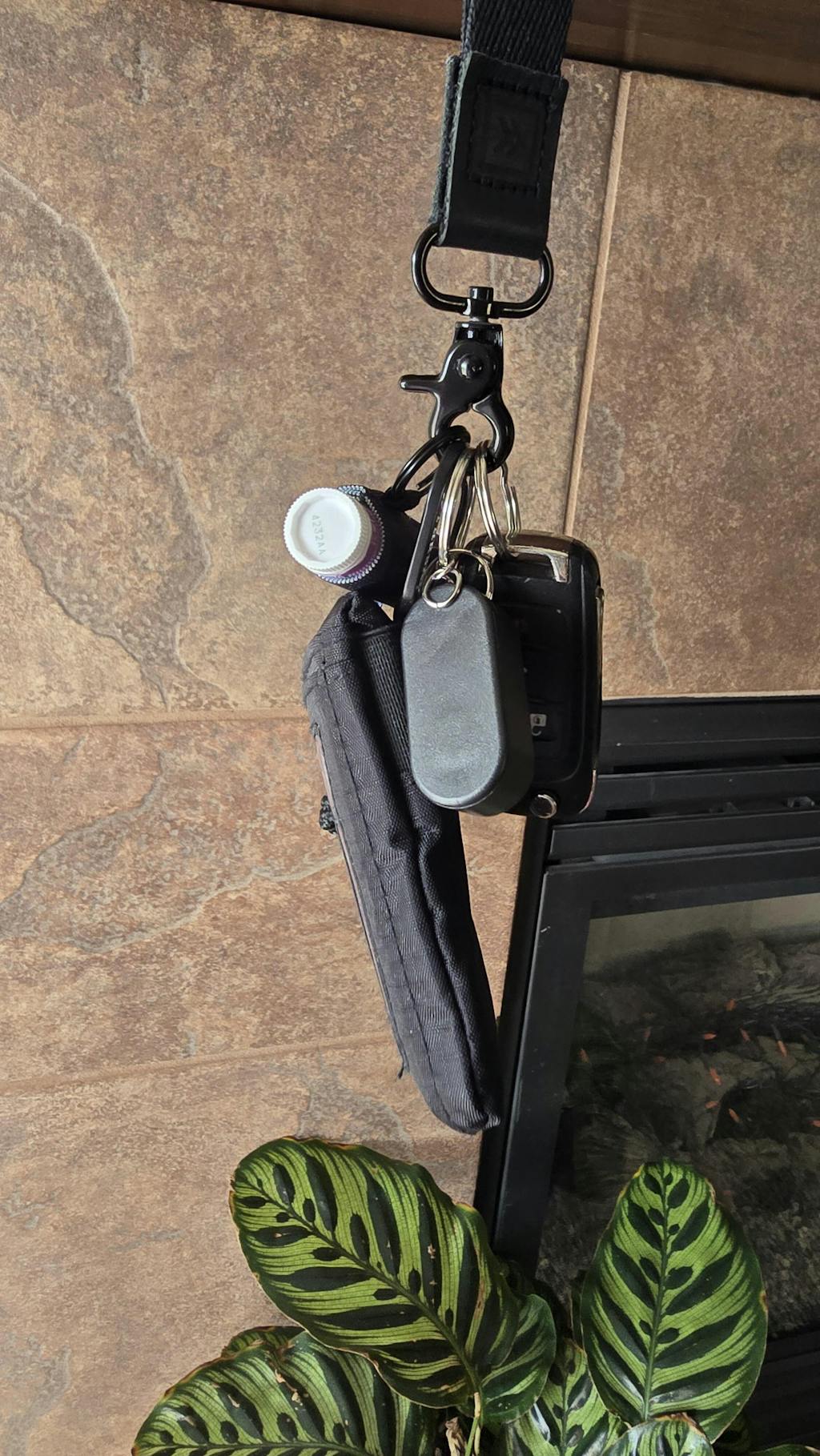
A Pill Pod keychain pill holder is a simple option for this. It’s compact and minimalist. It has a secure closure, but it’s still easy to open. The low-profile shape won’t poke in a pocket or small bag. It comes in Mint, Midnight, Blush, and Lavender, and it’s $14.99.
Pill Pod Keychain Pill Organizer
Compact, minimalist design, secure closure, easy to open, low-profile shape. Available in Mint, Midnight, Blush, Lavender. Starting at $14.99.
Shop Pill Pod →
Tip: Only carry what you need for that day. Fewer pills in motion means fewer mistakes.
Tools that make caregiving easier (without feeling clinical)
You don’t need a complicated app stack. You need one system you’ll actually use. This is a big part of how to organize medications for elderly parents without burning out.
Reminders and tracking that don’t overwhelm
Pick one reminder method:
- Phone alarms with clear labels (“AM heart meds”)
- Smart speaker reminders in the kitchen
- A paper log on the fridge
If more than one person gives meds, use a shared log. Otherwise, double-dosing can happen fast.
Tip: Use a checkbox log: Date / AM / Noon / PM / Notes. That’s it.
Caregiver communication and backups
Share the master med list with:
- A sibling
- A trusted neighbor
- A paid caregiver
- The primary care doctor
For long days out, many caregivers keep a tiny backup dose in a bag. A small container can help with that. If you like minimalist options, you can shop Pill Pod organizers and accessories and choose what fits your routine.

Caregiver checklist: your weekly medication organization workflow
This caregiver medication checklist is the “boring” routine that prevents emergencies. It also answers how to organize medications for elderly parents in a way you can repeat every week.
Your weekly workflow (20–30 minutes)
- Inventory check
- Compare bottles to the master list
- Safety scan
- Look for duplicates
- Check for new side effects
- Confirm any recent dose changes
- Fill the system
- Double-check each compartment against the label
- Verify
- Make sure morning vs. night pills aren’t swapped
- Refill planning
- Confirm pharmacy pickup or delivery
- Update the master med list
- Remove stopped meds
- Update directions
- Prep for the week
- Restock the med station
- Confirm upcoming appointments
Travel and appointment mini-checklist
Use this before you leave the house:
- Master med list (printed or phone)
- Allergy list
- One-day dose (not full bottles)
- One PRN med if needed
- Water and a small snack (helps with nausea meds)

Quick comparison table: choose your “home + away” setup
| Need | Home setup | Away setup | Why it works |
|---|---|---|---|
| Mild memory issues | Weekly pill organizer | Single-dose carry | Easy daily checks, less confusion outside |
| Complex schedule (3–5 dosing times) | Pharmacy blister packs | Single-dose carry | Clear timing, less sorting |
| Arthritis or weak grip | Blister packs or easy-open organizer | Easy-open small container | Less twisting and pinching |
| High risk of errors | Caregiver-administered dosing | Caregiver carries dose | Tight control, fewer mistakes |
Note: If errors keep happening, switch systems. Don’t blame yourself. Upgrade the structure.
FAQ: how to organize medications for elderly parents
What is the best way to organize medications for elderly parents?
The best way depends on memory, dexterity, and how many meds they take. For many families, the best “base” is:
- A master med list
- One pharmacy
- A weekly pill organizer for elderly routines or pharmacy blister packs
- A simple reminder method (alarm or paper log)
How do I keep my elderly parent from taking the wrong pills?
Use layers of safety:
- Keep a single “med station” at home
- Use large-print labels and color-coding by time of day
- Use a pill organizer for elderly schedules or blister packs
- Keep a daily log that shows what was taken
- Remove old bottles and duplicates from easy reach
Should I use a pill organizer or pharmacy blister packs for seniors?
Here’s the simple rule:
- Use a pill organizer if the regimen is stable and someone can fill it correctly.
- Use blister packs if there are many meds, many dosing times, or memory issues.
How do I create a medication schedule for an elderly parent?
Start with the label directions. Then build a medication schedule for seniors around daily “anchors”:
- Morning: after brushing teeth
- Midday: with lunch
- Evening: after dinner
- Bedtime: when lights go out
- “After breakfast: blood pressure pill + vitamin D”
- “After dinner: cholesterol pill”
- “Bedtime: sleep pill only if needed”
What should I do if my elderly parent misses a dose?
First, check the organizer or log. Don’t guess.
Then:
- If it’s slightly late, many meds can be taken then.
- If it’s close to the next dose, some meds should be skipped.
- Don’t double-dose unless a pharmacist or doctor told you to.
Conclusion: a calmer, safer way to manage meds
Learning how to organize medications for elderly parents isn’t about being perfect. It’s about building a simple system you can repeat. Start with a full inventory. Make a master list. Get a pharmacist review. Then choose the right method for your parent’s real needs.
If you want to make medication management for seniors less stressful, focus on two things: fewer moving parts and clearer roles. That’s how you prevent medication errors in elderly loved ones over the long run.
If you’re ready to simplify your “away from home” routine, explore minimalist options that fit in real life. You can start with a compact carry solution or browse more tools when you need them.